One question, three ways of asking it. How does this mind work?
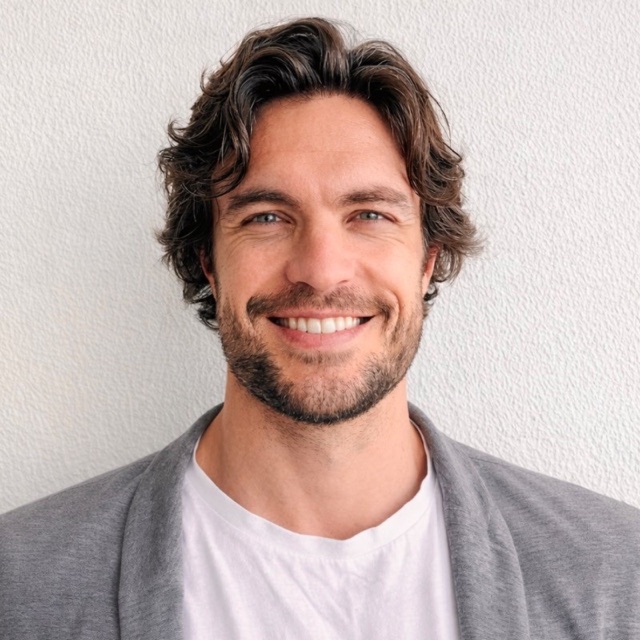
I have chased that question down three paths, and they keep arriving at the same place. First as a reader of people, in Russia, in their language. Then as a physician, trained to diagnose systems rather than symptoms. Then as an AI engineer, building the instruments that can measure what the first two could only sense.
I am Canadian and American, based in Dubai, in London often. I speak English and Russian.
Russia, where it began
Long before the medicine or the AI, there was Russia. At nineteen I went to Siberia for two years and spent them trying to change what people believed. By the end I led a mission of about a hundred and fifty people across nine cities, roughly a third of the country, and founded a congregation in Angarsk from nothing. I understood the Russian mind well enough to move it, and I have spent the years since working out what that says about every mind, mine included. The first essay on this site, The Human Mind Is Up for Grabs, starts there.
The same skill later took a commercial form. I built Qutuva, a software company that recruited and led Russian engineers delivering for American companies and universities. I hold a BA in Russian Studies from BYU, summa cum laude, studied economics, language and politics at the Russian Presidential Academy in Moscow, and tested at High Oral Proficiency in Russian. I lived in Russia for more than two years, from the Pacific Far East through Lake Baikal to Moscow and St Petersburg, and I have lived in Brazil, the UK, the UAE and the US since.
Medicine, the clinician's eye
I trained at Stanford in medicine and in AI and data science at the same time, from 2018 to 2025. A medical training is, underneath, a training in reading complex systems under uncertainty. I pointed it at the organ medicine understands least.
At Stanford I was Co-Executive Director of HealthAI, and I founded and taught the graduate course Deep Learning in Medicine. Clinically, more than two and a half thousand rotation hours across psychiatry, neurology, internal medicine and surgery. Research and applied work ran through DeepGraph (graph networks for drug discovery), Osono (maternal health), DermNet (a dermatology triage AI deployed commercially in Singapore during COVID), Pacify (paediatric triage), MetaVision (imaging), the Ignite genetic screening programme that became MyOme, the Alder Telomere Laboratory, a burn unit in Kathmandu whose protocols were adopted by seven institutions, and Odyssey, the first legally regulated psilocybin clinical programme under Oregon's Measure 109.
AI, the builder's hand
Eight years building AI that ships into hard environments. Fifteen or more healthcare AI projects across ten countries, and thirty or so systems in all. Founder and head-of-AI roles in AI-native infrastructure, regulated-industry compliance, and psychological assessment of AI agents, where the same machinery that maps a human mind is pointed at a synthetic one.
Today that is MindTech, the instrument for the mind. Nexian, where I am a founding partner and Head of AI, building AI systems for regulated, high-stakes industries. Tanner AI, a small advisory practice. And the Command Center, the personal AI operating system I run on myself every day and build for a few people a month.
What the three add up to
Medicine gave me the diagnostic eye, AI gave me the means, and reading people gave me the target. The frame that ties it together treats a mind like a computer. Hardware is psychological capacity, software is belief, and an operating system orchestrates the two. Around it sit the two ideas that make the whole thing defensible and measurable. Psychosecurity, a security model for the mind, and orthogonal mind shadows, the principle that you cannot reconstruct a three-dimensional object from a single shadow, so a mind has to be measured from angles that do not predict each other. The Lab has working pieces of this you can try.