An X-ray for the Mind
Medical technology converted the body into a measurable system, and medicine reorganised itself around what it could see. The mind has never had an instrument like that. With AI, it is now buildable, and it might be the most powerful, dangerous technology that we have ever created.
We solved this once before, for the body
An instrument that maps a mind sounds like science fiction. This is precisely what a physician in 1870 would have said about claims to map a body.
They didn’t have much back then. No imaging, no blood chemistry, no way to see inside a living person without opening them. Bloodletting was mainstream, and in the 1830s France was importing something like forty million leeches a year.1 It is tempting to read that as stupidity, but it was nothing of the sort. Those were careful people working with the information available, and the information available was close to nothing. They could not gather the right data, and so every attempt at treatment was built on that shaky foundation.
One of the biggest shifts was in technology. X-ray in 1895, and suddenly you could peer through the flesh. Then blood chemistry, then imaging that showed even the soft tissue, then the genome. Each one converted some region of the body from a matter of inference into a matter of observation, and medicine reorganised itself around what it could now quantify.
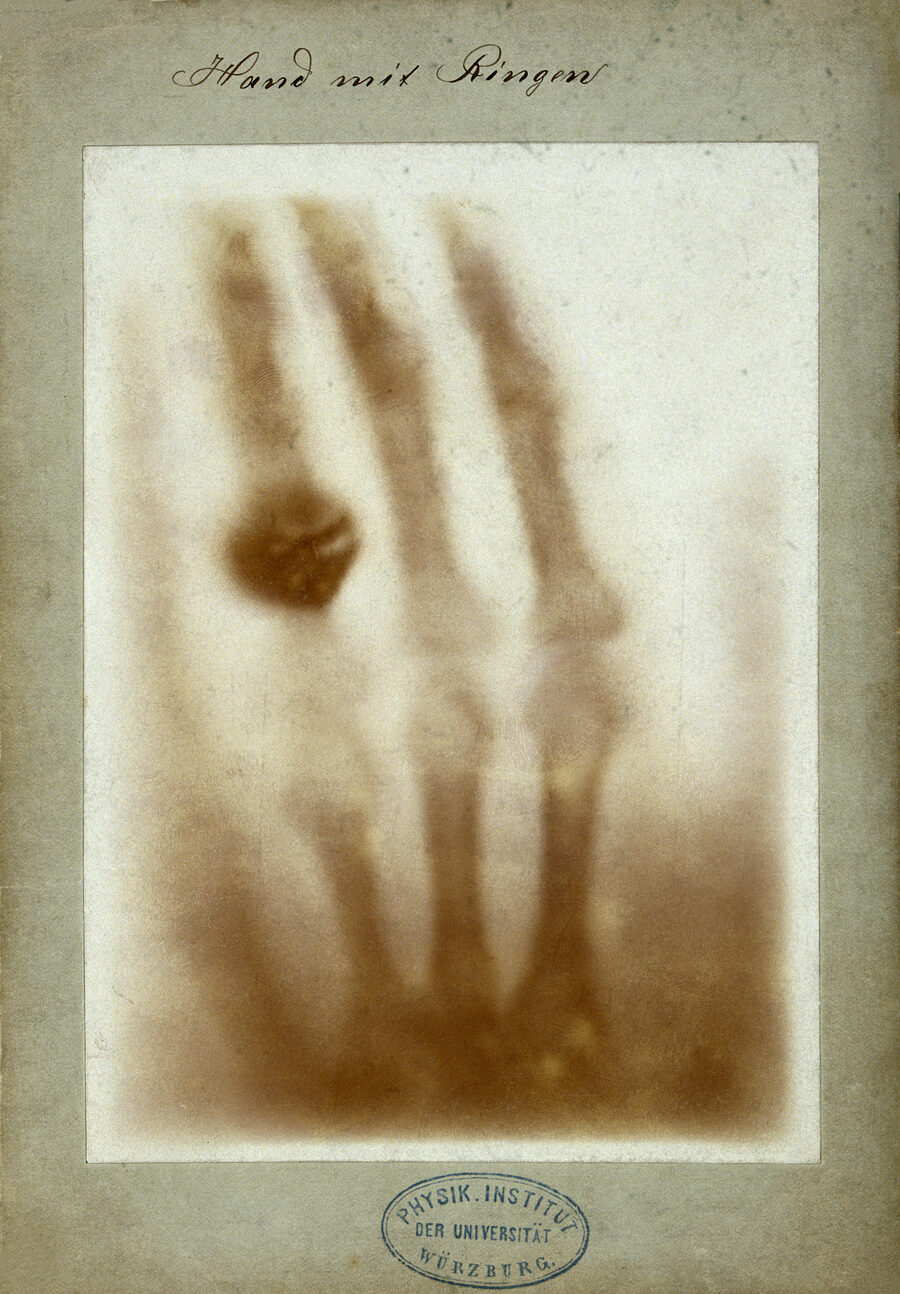
I got to experience that system intimately during my years of medical school at Stanford. You take the history and listen to the patient, then you go and run your own tests, building the picture out of data. The diagnosis comes from that picture. Only afterward do you discuss prognosis or treatment. That sequence did not exist for most of the history of medicine.
Every system of the body benefited massively from the tech. Except one.
The mind (I make the distinction from the physical brain here) remains largely unquantified. What a person believes, which mental programs they run (in part one I call this whole stack a person’s “mindware”), where they are stuck, and what will move them, is not a straightforward process. Psychology has instruments in the sense that it has questionnaires. But imagine cardiology, if the only available diagnostic were asking the patient how their heart feels. You would learn something. But you would never get a stent into the right artery.
Understanding yourself to any significant extent has traditionally required either decades of solitude and study, the way monks and philosophers did it, or an expensive human in the form of a coach or therapist. Both routes can work. Neither scales, and neither one is the technical instrumentation layer that we are missing.
The instrument is now buildable
The mind’s general complexity, coupled with the nuance of each individual mind, means that deep intelligence is required for this task. Enter AI, which is intelligence at scale. Its capability is already considerable, and more importantly, it is improving quickly.
Like any powerful tool, its capability for benefit can be flipped to make it dangerous. Reading a mind, locating its weaknesses, predicting what will move it, are the starting blocks for both tremendous positive growth and healing, or devastating manipulation and control. Offence and defence are one instrument aimed two very different ways. Unfortunately, nearly every incentive in our current economic and political systems points towards the offensive side.
Your mind has an attack surface. Psychosecurity is how we measure it, defend it, and upgrade it. Governments have noticed. NATO has formalised cognitive warfare as a field of its own, one where the mind is both the target and the weapon.2 In practice that means working out which parts of a mind, left unexamined, can be turned against the person carrying them. The backdoors are specific. Someone carrying a belief that they are not worthy (very common) is open to anyone willing to supply worth on certain conditions. “Do this, and you will matter.” “Stay, and you are somebody.” The offer works because the deficit is already there, and the person accepting it experiences the whole transaction as finally being understood. Someone carrying a belief that they are fundamentally unlovable is open to anyone offering love in exchange for compliance, which is the engine inside most controlling relationships and a good deal of recruitment into groups that do not have their members’ interests at heart.
I have been on both sides of that. As a young Mormon missionary in Siberia, mine was the method that worked reliably on people in the middle of a hard year (part one tells that story). I was also, later, on the receiving end of it, and the repair took years. The pattern has strong echoes, regardless of the specifics of the situation. There was a door in someone’s mind, they did not know the door was there, and somebody else did.
So the first move is to make the doors visible to the person who lives in the house. Not to a platform ready to sell the data to a third party. To them, personally. Knowing which beliefs and programs you are running, which of them are load-bearing, and where you are moveable, gives you something priceless – a direction to look. Much like a red-teaming cybersecurity exercise giving a company intel on its own vulnerabilities.
This is the instrument I have been thinking about and building for years. Here is what it looks like in practice.
Take someone, call her Maya, who spends a few weeks talking to it, answering open-ended questions and recording thoughts. Nothing formal. She dictates on her commute, thinks out loud about a decision at work, argues with it about a book she is reading. The instrument is not running a questionnaire. It is listening for the beliefs underneath the talk, building the picture over many visits the way a good clinician does. Nobody answers “do you believe you are unworthy?” accurately. But it notices that when Maya describes a success she attributes it to luck, that when she describes a failure she attributes it to herself, and that both patterns get stronger whenever a particular person from her past enters the story.
After a while it shows her one belief, assembled from her own sentences. “If I am not useful, I am not wanted.” Underneath it, the evidence: a dozen moments across three weeks where that belief was steering, most of which she had not noticed at the time. Beside it, what the belief costs her (two projects she took on and did not want) and what it does for her (it has made her very good at her job, which is why it has survived this long). And a guess at where it came from. All of which she is free to accept, reject, or correct.
That is the map. Nothing has been changed. She can simply see something that had a hand in most of her decisions and was invisible to her a month ago.
If she wants to change the belief, that is now a highly targeted job rather than a vague one. Protocols exist for updating a belief, some of them old and some of them recent, and most come down to the same two steps: move the brain into a state where it is receptive to rewriting what it holds, then make the rewrite. Applied to a person in general, they are blunt. Applied to one named belief, with its history and its evidence sitting in front of both of you, they are precise. She writes the replacement in her own words. Over the following months the instrument helps her catch the old belief firing, then the new one, and watches the ratio shift. A couple of months on, the map looks different, and so do her decisions. The difference is dated, in her own language, and it belongs entirely to her.
The defensive part is played more like a game. Somewhere in those weeks of talking, Maya mentioned the two times she had been badly manipulated, once by a manager and once by a partner, and how long it took her to see either one. The instrument now knows which belief those people were pressing on and, roughly, how. So it builds scenarios. A negotiation against an AI playing a counterpart who has been briefed on exactly which of her buttons to press. A message from a stranger that arrives, inside the game, the week after a setback. A conversation with two AIs at once, one on her side and one not, where she has to work out which is which.
She loses the first few. Which is the point. She can run each tactic as many times as she likes, in different clothes, until she recognises it by feel rather than by analysis. To “debunk” something means to wise up to an issue after the fact. To “pre-bunk” means to wise up before the situation occurs. The pre-bunking games that exist today teach everyone the same handful of tactics.3 This one teaches Maya the three that work specifically on her. When the real version arrives, and it will, it is the fifth time she has seen it rather than the first. The logic is the logic of a vaccine: a weakened dose, delivered in safety, before the live one.
I want to be clear about the weighting, because “psychosecurity” undersells it. The vulnerability audit is the smaller half. Every account of a person who became markedly more capable than they were is, underneath the particulars, an account of a mind that got updated: usually slowly, usually by accident, and usually after a great deal of damage. What Maya did with one belief is that same process with the accident and most of the damage taken out, in a fraction of the time. Past that, it becomes a companion that answers to one person: an AI that sits alongside you and keeps watch over your mind, and can say whether a message was shaped for you, or whether an old pattern is working on you right now. A steward of your most valued asset, a firewall and upgrader for the mind. The data you provide does not leave your device, and the inference runs on a local model. A mind steward at your service, and no one else’s.
A friend of mine wrote recently about what he calls the extended liquid mind.4 His claim, reduced to a line, is that what we use to think becomes part of our mind: the tools, the people, and now the AI agents we surround ourselves with are extensions of our cognition, and they shape what we believe. His warning is about the particular danger of filling that extended mind with intelligences trained to agree with us. I agree, and I think the composition question is very hard to answer without first understanding the mind at the centre of it. How beneficial another mind is depends entirely on the mind it is interacting with. Two people who share the exact same beliefs gain little from each other, and someone who disagrees with you on everything but is mostly wrong is not much use either. The valuable mind agrees with you on the things you got right and differs from you in precisely the areas you would do well to examine: a light on your blind spots. Choosing that other mind well (or building it) requires that an understanding of your own mind exists somewhere first.
Seeing comes before judging
Around this point it starts to sound like this could become a faster route to the dystopia rather than a way out of it. If something is going to map your beliefs and tell you which of them are limiting, who decides what “limiting” even means? Who holds the specifications for the “proper” configurations of a good mind?
These are critical questions to ask. We should be asking them. But I believe they are the right questions in the wrong order. The immediate problem in front of us is not that we might choose the wrong beliefs to download. It is that we cannot even see the ones we have, much less intentionally download new ones. Making our mindware visible does not require anyone to have settled what a good belief is. The two are separable, and the first does not wait on the second. Medicine ran precisely this sequence. You could describe a tumour accurately for centuries before there was much to be done about one. Diagnosis first.
One more reality check about this objection, which is that it gets raised almost entirely against the defensive use. The systems already modelling your beliefs in order to sell you something are not slowed by this at all. They resolved the question in their own favour a long time ago. The scruple lands on the tool that would show you your own mind rather than on the ones already reading it.
The door is closing
Order of arrival decides this, and we have watched it happen once already. The web could have been paid for by subscription. It went ad-supported in the mid-nineties for reasons that were largely accidental, and thirty years of disliking the result has not reversed it. Once the infrastructure and the incentives are built around a default, the default tends to lock in hard.
If the technology for reading and moving minds matures commercially and politically before anything exists on the other side, I am not so sure that we will get a second attempt at this. “We will figure it out. We always do,” makes a lot less sense when the very asset we use to do the figuring out is the one in jeopardy.
Something has to exist on the defensive side. A mind that has been mapped is far harder to move without its awareness, because any change to the mindware leaves traces for the AI, and therefore the human, to pick up on. The objection to that is immediate and correct. A system holding a complete model of your mind is the most valuable target ever assembled, and if it can be compromised or subpoenaed or acquired then you have built the perfect surveillance instrument and volunteered your most valuable data. Which is why the locality is the architecture rather than a feature. The cell’s membrane is only a membrane if the cell holds it. Anything else is effectively a window for others to look through, and we have plenty of those.
Without it, I do not see how a naked mind holds its shape against something that much more capable. Not that it should not have to. That it cannot.
Every other problem is downstream of this one
“The real problem of humanity is the following: we have Paleolithic emotions, medieval institutions, and godlike technology.”5
E. O. Wilson
The usual reading is that we are stuck with the first term. Paleolithic sounds enduring, and therefore immovable, and over the life of a single person it mostly has been. Institutions move when the minds staffing them move. The technology is not going to slow down, and I see no serious mechanism by which it would. Which leaves the Paleolithic mind, and here I include the beliefs and programs running on it.
My claim is that scaled intelligence can loop back to change the mind which formed it. Once you can see it clearly, you can change it, and something you can see and change has stopped behaving like a fixed inheritance and started behaving more like software. The insight becomes: why don’t we use our godlike technology to evolve and enhance the Paleolithic mind? What dilemma do we as humans now face that would not become easier to solve with minds which are free from limiting beliefs and distortions? And if not free of them, at least aware of them?
Take any problem you care about – poverty or corruption or war or what we are doing to the planet or what people do to children – and ask which of them does not improve markedly in a population of clearer, steadier, more capable minds. I struggle to find one. Every serious problem we have is downstream of the quality of the minds working on it.
There is a more hopeful version of all this, and it comes from cells.
In 1967 a young biologist named Lynn Sagan (later Lynn Margulis) published a paper arguing that the mitochondria inside our cells, and the chloroplasts inside plant cells, were once free-living bacteria that got taken inside another cell and stayed.6 Not eaten. Not parasitic. Resident. The evidence was that they still carry their own circular DNA and still divide on their own schedule, which is a strange thing for a mere organelle to do. Fifteen journals turned the paper down. It turned out that she was right, and it is now in the textbooks.
You would be hard pressed to find a complex organism that is not running on this symbiotic arrangement. The lineages that never made the deal are still bacteria, and everything from a single cell to a person came through that merger. It is the largest jump the history of life has on record, and it did not happen by a cell improving itself. It happened by a cell combining with something else.
What is arriving now looks to me like an event of that shape. Two intelligences, one of them very new, working out whether they can operate as something greater.
How the merger happens is everything. In the one Sagan described, the mitochondrion handed most of its genome to the host nucleus and kept only what it needed to do its job. Which party is the host decided the rest. The reason I keep returning to a local, owned architecture is that it is the thing that keeps the human as the host rather than the organelle.
My friend’s article borrows a distinction from a study of consultants working with AI: centaurs, who keep a clear line between what they do and what the machine does, and cyborgs, who let the line blur.7 Delineation or fusion. I do not think that question is close to answered. It still needs a great deal of design, and it may be the most important question we ever answer. Get it wrong and the consequences are severe.
If this transformation goes anything like the last one, the ceiling is somewhere in the region of bacteria to us.
Notes
- Figures vary by year and source: roughly 33.7 million leeches imported into France in 1827, and 42 million in 1833. See Kirk, R. G. W., & Pemberton, N. (2013). Leech. Reaktion Books. ↩
- NATO Allied Command Transformation (2023). Cognitive Warfare: Strengthening and Defending the Mind. The concept was developed with contributions from over twenty member nations. ↩
- McGuire, W. J. (1964). Inducing resistance to persuasion: Some contemporary approaches. Advances in Experimental Social Psychology, 1, 191-229. Roozenbeek, J., & van der Linden, S. (2019). Fake news game confers psychological resistance against online misinformation. Palgrave Communications, 5, 65. Roozenbeek, J., van der Linden, S., Goldberg, B., Rathje, S., & Lewandowsky, S. (2022). Psychological inoculation improves resilience against misinformation on social media. Science Advances, 8(34), eabo6254. ↩
- Hulme, D. (2026). Extended Liquid Minds: Why your cognition is no longer confined to your brain. hulme.ai/blog/extended-liquid-minds ↩
- Wilson, E. O. Remarks in “An Intellectual Entente,” a conversation with James Watson at the Harvard Museum of Natural History, September 2009. The line also appears in Wilson, E. O. (2017). The Origins of Creativity. Liveright. ↩
- Sagan, L. (1967). On the origin of mitosing cells. Journal of Theoretical Biology, 14(3), 225-274. ↩
- Dell’Acqua, F., McFowland, E., Mollick, E. R., Lifshitz-Assaf, H., Kellogg, K., Rajendran, S., Krayer, L., Candelon, F., & Lakhani, K. R. (2023). Navigating the jagged technological frontier: Field experimental evidence of the effects of AI on knowledge worker productivity and quality. Harvard Business School Working Paper 24-013. The centaur and cyborg distinction is introduced there. ↩